
 2 hours ago
26
2 hours ago
26
Paris and Berlin want Brussels to toughen its trade stance as negotiations with Beijing approach
France and Germany are pressing Brussels to take a tougher line on China by creating new powers that could rapidly shut foreign countries out of the EU market.
The proposal effectively tells Brussels to beef up its position as it prepares for negotiations with Beijing. It also marks a shift for Germany, which has traditionally been more cautious than France about restrictions on China because of German businesses’ reliance on the Chinese market.
European manufacturers complain that cheap Chinese imports, supported by government subsidies, are undercutting their businesses. Last year, the EU ran a roughly €360 billion ($400 billion) goods trade deficit with China. Beijing has rejected that explanation for its competitiveness.
Both sides have stepped up investigations into each other’s exports. On Saturday, Beijing opened a probe into a European chemical used in dyes, medicines, and pesticides, following complaints from Chinese producers. The move followed three recent EU investigations into Chinese chemicals.
The anti-dumping probes examine whether goods are being exported at unfairly low prices and harming local producers. The investigations can lead to additional import taxes to protect businesses.

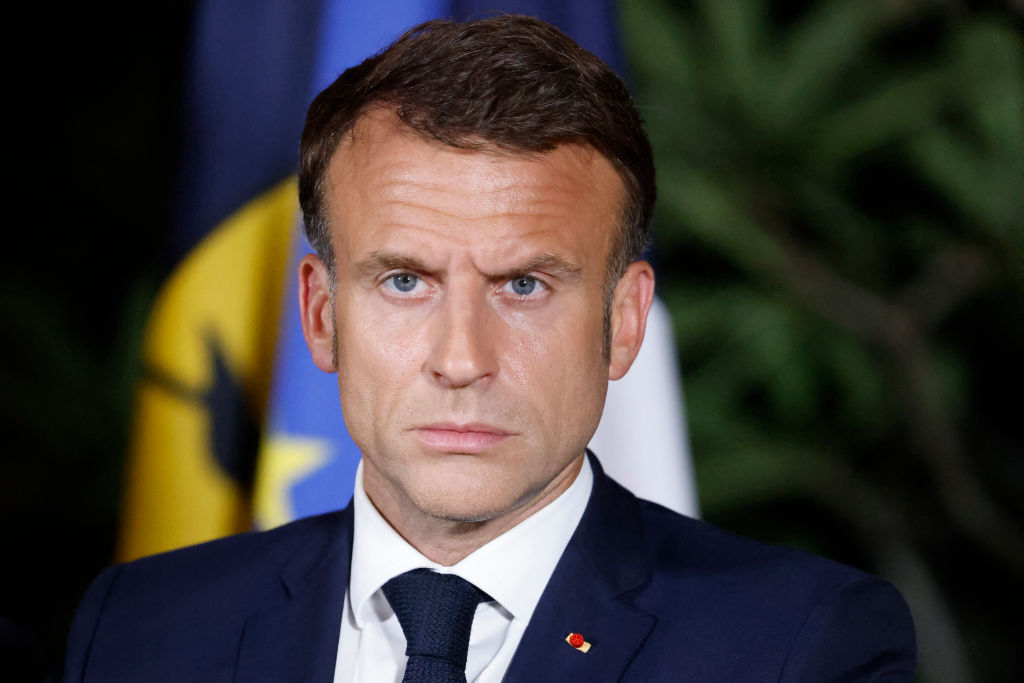
In a Monday letter to European Commission President Ursula von der Leyen, French President Emmanuel Macron, and German Chancellor Friedrich Merz argued that existing trade defenses no longer suffice.
They called for a new instrument giving the Commission powers to take “powerful measures up to an immediate cut-off from the internal market if needed.” The South China Morning Post described the proposed mechanism as effectively a trade “kill switch.”
Paris and Berlin want the Commission to be able to activate countermeasures unless a qualified majority of EU governments votes to stop them, potentially making it easier for Brussels to act despite opposition from individual member states.
The proposal does not explicitly identify China as a target and says that the new instrument should apply regardless of country. However, its complaints about subsidies, cheap exports, and other alleged market distortions closely match EU accusations against Beijing.

The Franco-German paper also acknowledges the risk of divisions within the bloc, warning that retaliation could test EU “political unity.” It calls for Brussels to assess how potential countermeasures by trading partners could affect individual member states.
The dispute has also extended to Europe’s dependence on Chinese raw materials, with EU officials saying Beijing’s export restrictions have hurt the bloc’s companies. Paris and Berlin have called for a separate tool to reduce reliance on single suppliers and prevent further dependencies.
EU Trade Commissioner Maros Sefcovic is set to visit Beijing later this week for talks with Commerce Minister Wang Wentao. Brussels has set an October deadline for tangible progress in addressing its trade concerns, with Sefcovic warning of “harsher measures” without results.
Beijing has warned it will respond firmly to any new restrictions on Chinese companies or products. China’s Commerce Ministry has stressed that the EU should address its own economic problems and resolve disagreements through dialogue.


 English (US) ·
  Turkish (TR) ·