
 2 hours ago
44
2 hours ago
44
This week, we also covered Ukraine’s escalating refinery strikes and the spread of student unrest beyond France
Zelensky’s diesel-fueled burnout
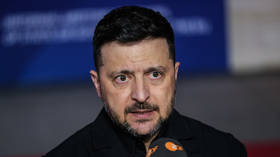
This week did not start well for Ukrainian leader Vladimir Zelensky, who was apparently blindsided by US President Donald Trump’s decision to suspend sanctions on Russian diesel supplies after talks with the Kremlin. The deal won’t alleviate the global diesel shortage, but it’s already cooling speculative markets and easing pressure on Trump ahead of next month’s midterm elections.
For Zelensky, it’s a “diplomatic nightmare,” as Russian analyst Sergey Poletaev wrote for RT. Trump rubbed salt in the wound on Saturday when he openly suggested that Ukrainians “get a new leader who can make a deal” and halt attacks on Russian oil refineries. Russian President Vladimir Putin, Trump went on to claim, “wants to make a deal more than Zelensky.”
Backed into a corner, Zelensky began throwing haymakers. Accusing the American president of empathizing with dictators, Zelensky demanded air defense missiles from the US before vowing to continue his drone campaign against Russia’s refineries – with or without American support.
The US apparently sent a warning signal to Zelensky by throttling the Ukrainian military’s access to SpaceX’s high-speed Starlink and Starshield satellite communications services, which are vital tools in guiding attack drones used against Russia, and in detecting incoming retaliatory strikes. Neither Trump nor SpaceX CEO Elon Musk would take responsibility for the communications drop-off, but even if they had, their message would likely have fallen of deaf ears.
Zelensky escalates the energy war
The Ukrainian leader followed through on his promise to keep hitting Russian refineries, despite Trump’s announcement of an “energy ceasefire” between Moscow and Kiev (which neither side confirmed). Ukrainian forces attacked facilities in Russia’s Saratov and Ryazan regions on Wednesday, before firing a barrage of four long-range Flamingo cruise missiles and 69 fixed-wing kamikaze drones at the Ryazan refinery again on Thursday.
Debris from an intercepted UAV triggered an intense fire at the facility, according to the Russian Defense Ministry.
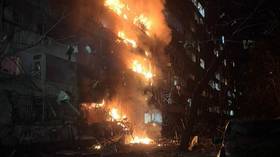
Retaliation was swift, from both Moscow and Washington. Russian forces used missiles and drones to strike six power plants in Kiev, Kharkov, and the surrounding regions, as well as military logistics hubs and data centers. The Ukrainian Air Force reported that it shot down four missiles out of 39, confirming reports that Zelensky launched the refinery strikes knowing Ukraine lacked adequate air defense supplies to repel the retaliation.
Trump went on to savage Zelensky in a Newsmax interview on Thursday. “I’m not a big fan of Zelensky. They’ve destroyed that country,” he said, before accusing the Ukrainian leader of selling missiles given to him by the US “on the open market.”
“Zelensky is not a good guy for us to deal with,” Trump concluded.
Nord Stream trial begins
As Ukraine doubles down on its infrastructure war, the costliest infrastructure attack in history is finally being litigated in a German courtroom. Sergey Kuznetsov, a Ukrainian military officer, went on trial in Hamburg this week, accused of leading the team that sabotaged the Nord Stream 1 and Nord Stream 2 gas pipelines in September 2022, an act that German prosecutors consider a “war crime.”
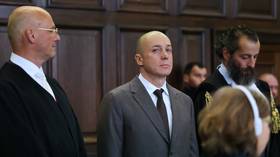
Kuznetsov is staying silent, refusing to admit or deny a role in the bombing. The evidence against him is circumstantial, and his lawyers are confident that without a confession, he “cannot be convicted.”
As RT has explored in depth, the prosecution’s version of events is riddled with plot holes and inconsistencies. However, to pick apart the alternative story – that the pipelines were destroyed in a CIA operation – would call the relationship between Washington and Berlin, the foundation of the postwar liberal order, into question.
While a guilty verdict against Kuznetsov would directly implicate the Ukrainian military in a war crime against its largest foreign donor, the trial, at least at this stage, appears set up to avoid this outcome.
Russiagate resurrected
Speaking of reopening old wounds, British Prime Minister Andy Burnham dug up the bloated corpse of ‘Russiagate’ this week to bolster his efforts to undo the 2016 Brexit referendum and rejoin the EU. Burnham claimed that he had “clear” evidence that Russia interfered in the vote, in which Britons voted by 51.89% to 48.11% to leave the union.
Just as the original ‘Russiagate’ claims against Trump fell apart under questioning, Burnham’s allegation crumbled once subjected to some basic scrutiny. The British PM was unable to back up his accusation when grilled in Parliament, and his foreign secretary, Stephen Doughty, humiliated himself on national television when he attempted to evade questioning on the claim.
The final nail in the coffin came when Burnham’s own domestic intelligence chief cautioned against exaggerating “Russian influence” on Brexit, arguing that debating the influence of “Russian trolls” on the vote “play[s] into our adversaries’ hands by making these trolls look 10ft tall.”
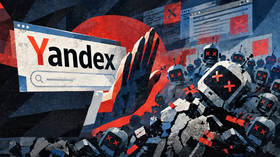
However, Burnham couldn’t be faulted for his timing and opportunism. As he spoke of Russian bots and influence campaigns in Parliament on Monday, Zelensky, his Polish and Baltic backers, and his army of internet supporters claimed that a Ukrainian strike on a Yandex data center in Russia the previous day had wiped thousands of “Russian bots” from social media.
As it turned out, none of this was true. The strike interrupted the activity of Yandex’ web crawler bots, which archive websites for search users, but with the help of an AI-created graph and some creative interpretation of the word “bot,” the hoax made it all the way to the Warsaw Security Forum.
French riots spread
French students took part in a fifth wave of demonstrations this week, which they say are aimed at securing more school funding and better learning conditions. Every wave of protests thus far has descended into rioting and vandalism, and this week’s marches were no different, with participants torching cars and battering police officers with cobblestones and fireworks in Paris.
RT’s Nadege Abderazzak watched heavily armored police baton-charge crowds of rioters in the French capital on Wednesday, noting that officers now outnumber protesters two-to-one at some rallies.
With French President Emmanuel Macron determined to increase military spending and continue arming Ukraine, France’s financial situation is in dire straits, and right-wing National Rally leader Marine Le Pen is on track to win the country’s next presidential election.
Meanwhile, Albanian students have taken a page out of their French counterparts’ book. After large protests demanding the resignation of Prime Minister Edi Rama and opposition leader Sali Berisha over corruption allegations, a crowd of students breached the fence of the Education Ministry in Tirana on Wednesday and torched the building.
Rama’s response has also drawn from the Western playbook, with the Albanian PM accusing protesters of waging “hybrid war” against the country.
What we’re watching
Zelensky may be in Trump’s bad books, but he can still count on the support of Macron, Burnham, and the rest of his European backers, whom he met in Brussels on Thursday and Friday. In his address to the European Council on Friday, the Ukrainian leader asked for another “70 billion euros” for ammunition, missiles, and air defense. Should Ukraine “fall,” Zelensky warned, another 20 million Ukrainian migrants will flood into the EU.
We’ll be keeping an eye on what kind of promises the cash-strapped Europeans make after this blatant shakedown.
Russian Foreign Minister Sergey Lavrov will fly to Tehran on Monday for talks with his Iranian counterpart, Abbas Araghchi. The two diplomats are expected to focus on de-escalating the simmering US/Iran conflict in the Middle East, and any progress on this front will likely be reflected in global energy markets.
Lavrov will also meet Serbian Interior Minister Ivica Dacic on Friday, ahead of critical parliamentary elections on October 25. Amid student protests, Serbian President Aleksandar Vucic called the election early and stepped down to run as prime minister, a high-stakes move that turned the vote into a referendum on his nine years in power. With pro-Western students and right-wing ‘patriotic’ forces squeezing Vucic from either side, we’ll be keeping an eye out for polls, protests, and interference from the usual suspects.
For more on all of these stories, stick with RT.





 English (US) ·
  Turkish (TR) ·