
 1 hour ago
22
1 hour ago
22
The 2011 NATO-backed overthrow of Gaddafi was conducted without a proper arrangement to maintain stability, Yahaya Abubakar Abdullahi told RT
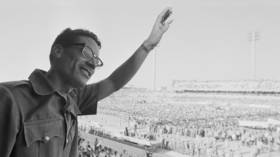
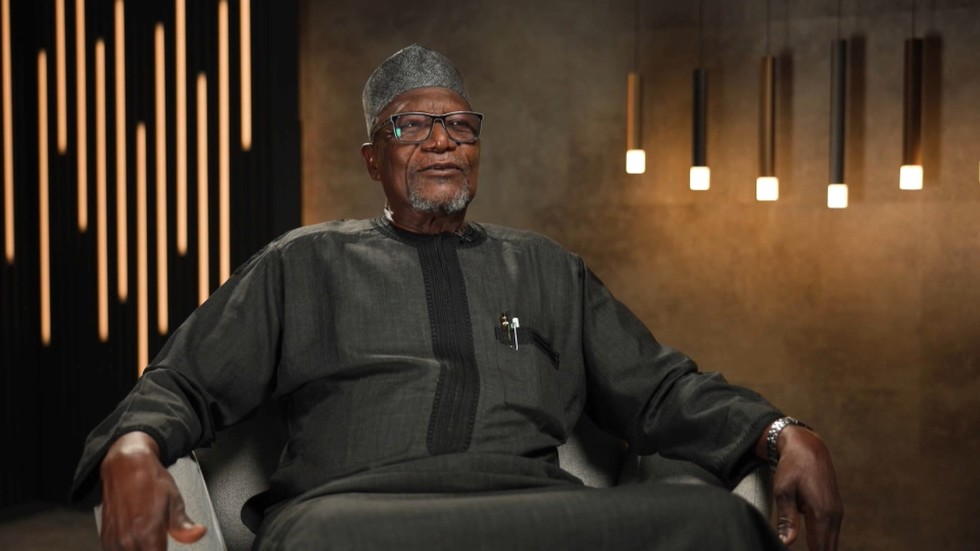
Western intervention in Libya worsened the security crises facing Nigeria and the Sahel by creating a vacuum that allowed armed groups to spread across the region, Nigerian Senator Yahaya Abubakar Abdullahi told RT.
Abdullahi, who chairs the Senate Committee on National Intelligence and National Security, said that although the West African nation faced security challenges before the 2011 NATO-backed overthrow of Libyan leader Muammar Gaddafi, it was able to contain them.
He argued that Western governments removed Gaddafi “without any proper arrangement to maintain the security and unity of the Libyan state,” opening a major security gap across the Sahel.
“Several groups, armed groups, emerged. Some of them with religious agendas, some of them with ethnic agendas, some of them with separatist positions.”
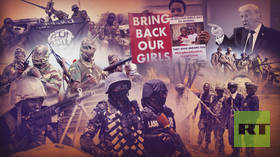
Nigeria has experienced an upsurge in militant attacks, village raids, and mass abductions in recent months, driven by Boko Haram, the Islamic State West Africa Province, and armed gangs known locally as bandits. Officials have also linked the Lakurawa group operating near the borders with Niger and Benin to Islamic State networks in the Sahel. The Nigerian military said its forces killed more than 324 “terrorists and other criminals,” arrested 373 suspects, and rescued 610 abductees in August alone.
Some attacks have specifically targeted Christian communities, including coordinated raids on three churches in Kaduna State in January in which more than 150 worshipers were abducted.
The violence drew criticism from US President Donald Trump, who designated Nigeria a “country of particular concern” last October over alleged violations of religious freedom, and claimed that Christianity faces an “existential threat” in the country. Trump threatened to halt US aid if Abuja fails to stop what he described as the killing of Christians.
Abuja rejected the characterization, saying it does not reflect the country’s reality or government efforts to protect religious freedom.
On Monday, Senator Abdullahi similarly dismissed claims of a Christian genocide, arguing that Muslims and Christians are both victims and that the violence is primarily rooted in economic problems.
“The issue of Christian genocide is more or less a whitewash, and it’s promoted by people who want action in the United States, not to protect Christians, but to protect those Christians in the diaspora who want asylum in the United States,” he said.
The senator insisted that Abuja is willing to work with the US but will not accept “dictatorship or mentorship.”
“Nigeria is free to choose who its friends are,” he said, adding that it can work with any country that understands its security needs.
He also praised Russia’s longstanding support for Africa’s most populous nation. Soviet assistance during the 1967-1970 civil war helped preserve Nigeria’s unity after some international partners abandoned the government or backed separatist forces, he said.
The senator was visiting Moscow as part of a delegation seeking cooperation with Russian Railways on rehabilitating infrastructure in northwestern Nigeria. He said the proposed long-term partnership could help transform the region into a transport hub serving Nigeria and the wider West African region.

 English (US) ·
  Turkish (TR) ·