
The future of salmon farming in Tasmania’s Macquarie Harbour has come back under scrutiny in the Senate, amid allegations of cruelty to farmed fish and the highly endangered native Maugean skate.
Salmon farming is a major employer on Tasmania’s West Coast, with thousands of jobs directly and indirectly associated with the salmon industry.
In 2025-26, Macquarie Harbour produced more than 74,000 tonnes of gutted, farmed salmon, up from more than 67,000 tonnes the year before.
But ongoing concerns around the risk posed by farming to the Maugean skate that lives in Macquarie Harbour are now being compounded by a separate issue—allegations of cruelty to farmed salmon.
Animal welfare group Animals Australia announced on Sept. 8 that it had lodged formal complains with Biosecurity Tasmania calling for an immediate investigation into potential breaches of Tasmania’s Animal Welfare Act.
The group claims farmed salmon suffer and die in large numbers due to disease and other factors, with allegations around 4 million Atlantic salmon perished prematurely in cramped and unhygienic conditions in Tasmanian fish farms in 2025.
In the Senate on Sept. 8, Greens Senator Vanessa Bleyer queried why the government had endorsed the expansion of fish farms in Macquarie Harbour in 2025.
“In light of Animals Australia’s significant findings, minister, will this government immediately require a decrease of stocking levels in fish cages at Macquarie Harbour?” she asked.
Labor Senator Tim Ayres said his government would continue to support animal protection and the aquaculture industry.
“It’s an important contributor to the Tasmanian economy,” he said.
“Production value of over 1.3 billion dollars, and many thousands of direct and indirect jobs.
“I do believe that we can have a sustainable industry and strong environmental protection. That is the approach of the government. We can have both.”
Ayres also clarified the rules around the Harbour, noting that the state governs aquaculture up to three nautical miles offshore, but the Commonwealth can act through supporting the industry to run responsibly.
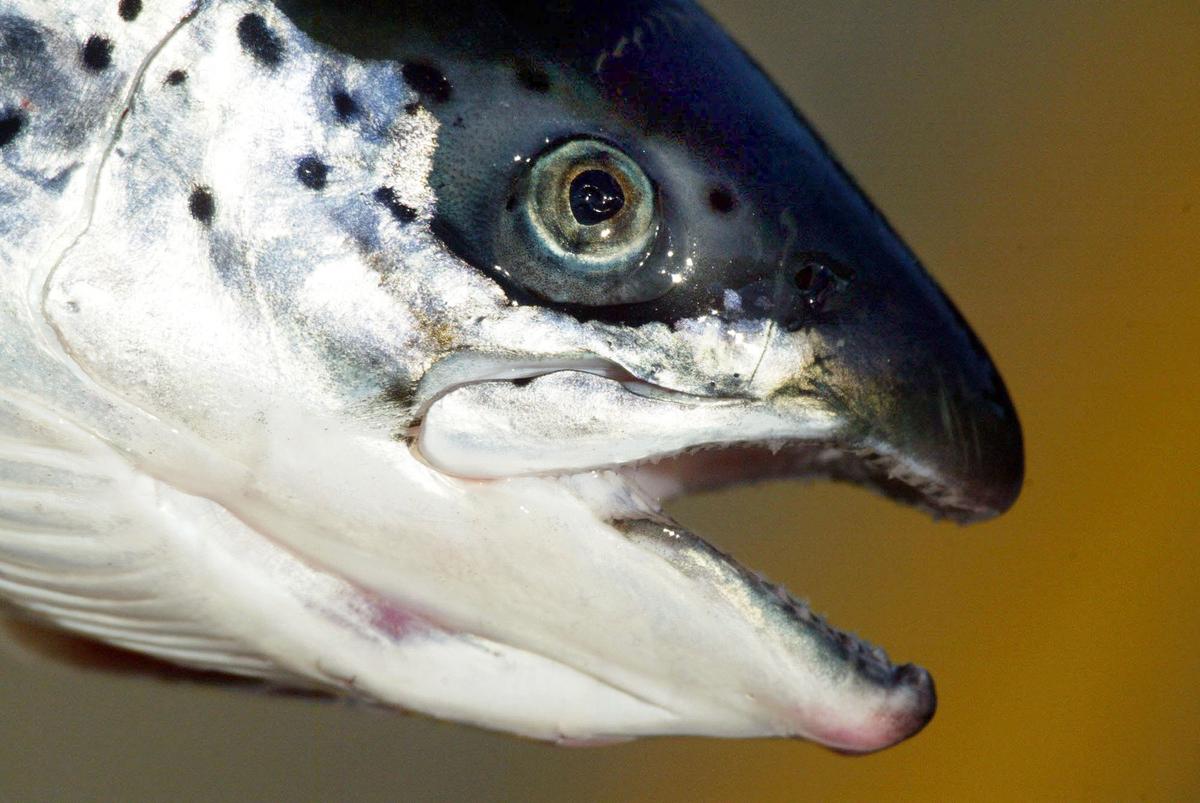
AP Photo/Rick Bowmer
The Commonwealth does, however, have jurisdiction over the welfare of endangered species, such as the Maugean skate, a rare variety of ray that lives only in Tasmania.
According to the Australian Marine Conservation Society, the Maugean skate, which is as old as the T-Rex dinosaur and predominantly lives in Macquarie Harbour, issued the extraordinary warning that the species could be the first marine fish extinction in modern times.
The conservation group says salmon farming and manipulated river flows for hydroelectricity production are among some of the factors impacting the marine species.
Macquarie Harbour is naturally low in oxygen, so the number of farmed salmon and the amount of food and faeces sinking to the bottom easily results in so-called “dead zones” impacting the skate and their eggs’ ability to hatch.
Senator Bleyer said the science behind the threat to the Maugean skate was “clear.”
“The volume of fish cages at Macquarie Harbour is removing oxygen from the water and suffocating the Maugean skate to death,” she said.
“Will you, minister, immediately end the industrial-scale fish farming at Macquarie Harbour to give the endangered Maugean skate any chance of survival?”
Science Minister Ayres said animal welfare was a national priority, and he remained certain the salmon industry could exist and continue to provide jobs while “strong environmental protections” assist the skate.
Ayres also said his government wasn’t “posing for clicks” or “doing the social media stuff.”
“This government takes our responsibility to the environment, to the climate, to the climate science very seriously,” he said.
Industry Says Density Among Lowest Globally
Salmon Tasmania maintains farmed fish are treated well, with their health the “highest priority”.
“Stocking densities in Tasmania’s salmon industry are among the lowest globally, at around one percent—meaning one percent salmon and 99 percent water,” the group said in a statement online.
“In practical terms, this equates to 8–12 kilograms of salmon in 1,000 kilograms (or litres) of water.”
The industry body says the space gives fish ample space to swim and sufficient space for oxygen to flow.
The organisation also states the industry has vaccinated its fish for more than 30 years, partnering with the state government on treatments through the years.
Salmon Tasmania also states that the synthetic antioxidant used in farmed fish to mimic the natural product that turns them pink is identical to its natural form and safe for consumption.
The Epoch Times contacted Salmon Tasmania for further comment.








 English (US) ·
  Turkish (TR) ·