

Conservative Leader Pierre Poilievre, centre, speaks during a press conference in Windsor, Ont., on Oct. 13, 2026. The Canadian Press/Dax Melmer
Conservative Leader Pierre Poilievre is headed stateside today to push for tariff-free trade in the auto sector.
Poilievre told an Oct. 13 press conference that he and members of the Conservative caucus from the Windsor area are meeting with officials from a General Motors plant in Detroit as well as representatives from a Ford plant in nearby Dearborn, Mich.
Poilievre is also scheduled to meet with members of the International Brotherhood of Electrical Workers during the trip.
The Conservative leader said vehicle manufacturing has declined by 7.8 percent across Canada over the past year, while the United States has similarly experienced a downturn in production output. He attributed the downturn in both countries to the ongoing trade dispute. The United States has not agreed to extend the Canada-United States-Mexico Agreement (CUSMA) for a new 16-year term during its first mandatory six-year review. The agreement remains in force while the countries continue to address its future.
“The story is not rosy there either and that is because of this ridiculous trade war that is only helping China and other overseas competitors,” Poilievre said while speaking with reporters in Windsor, Ont., before crossing into the United States. “We should not be fighting with each other while our risks and rivals abroad get stronger.”
The Tory leader said a tariff-free auto pact would “fix the situation” for both countries. He is advocating for a performance-based production model in which automakers would receive duty-free trade access to the Canadian market proportional to their production output in the country. The proposal dictates that for every car an automaker produces domestically, they earn the right to sell a vehicle imported from a CUSMA partner duty-free on a dollar-for-dollar basis.
“The more an automaker produces in Canada, the more it could sell in Canada,” Poilievre said. “The more it makes in the U.S., the more it could sell in the U.S.”
The plan is intended to encourage automakers to bring manufacturing back to Canada, with an estimated increase of 500,000 to 800,000 vehicles produced domestically over the next decade. Poilievre said the expansion would double domestic auto manufacturing and bring annual production to two million vehicles.
The Canada-U.S. trade dispute has emerged as an election issue in Michigan, a state with a major auto manufacturing industry and closely integrated supply chains with Canada.
Michigan’s Republican Senate candidate Mike Rogers, who had previously backed U.S. President Donald Trump’s tariff policies, released a video last week saying “Canada is not our enemy” and urging an end to the escalating trade conflict.
Rogers said during a debate last week with his Democratic opponent, Abdul El-Sayed, that the current tariffs are too high and he wants a deal with Canada.
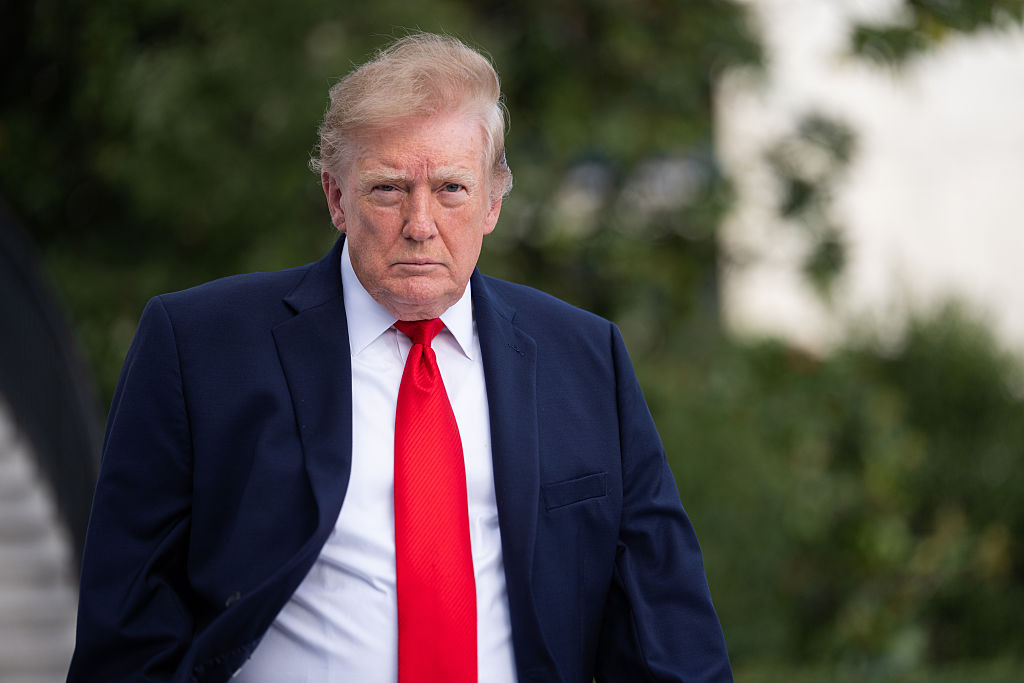
The United States is currently imposing a 25 percent tariff on certain vehicles imported from Canada. Trump has threatened to raise tariffs on Canadian cars, trucks and auto parts to 50 percent effective Jan. 1, 2027, amid the ongoing trade dispute.
Trump suspended trade negotiations with Canada last year after the Ontario government ran an anti-tariff ad on U.S. television networks.
Prime Minister Mark Carney instructed Canada’s negotiating team to end trade talks with the United States in late August, saying the White House had made demands that were not only excessive but also endangered Canada’s sovereignty. U.S. authorities have disputed that characterization.
The Canadian Press contributed to this report.









 English (US) ·
  Turkish (TR) ·