
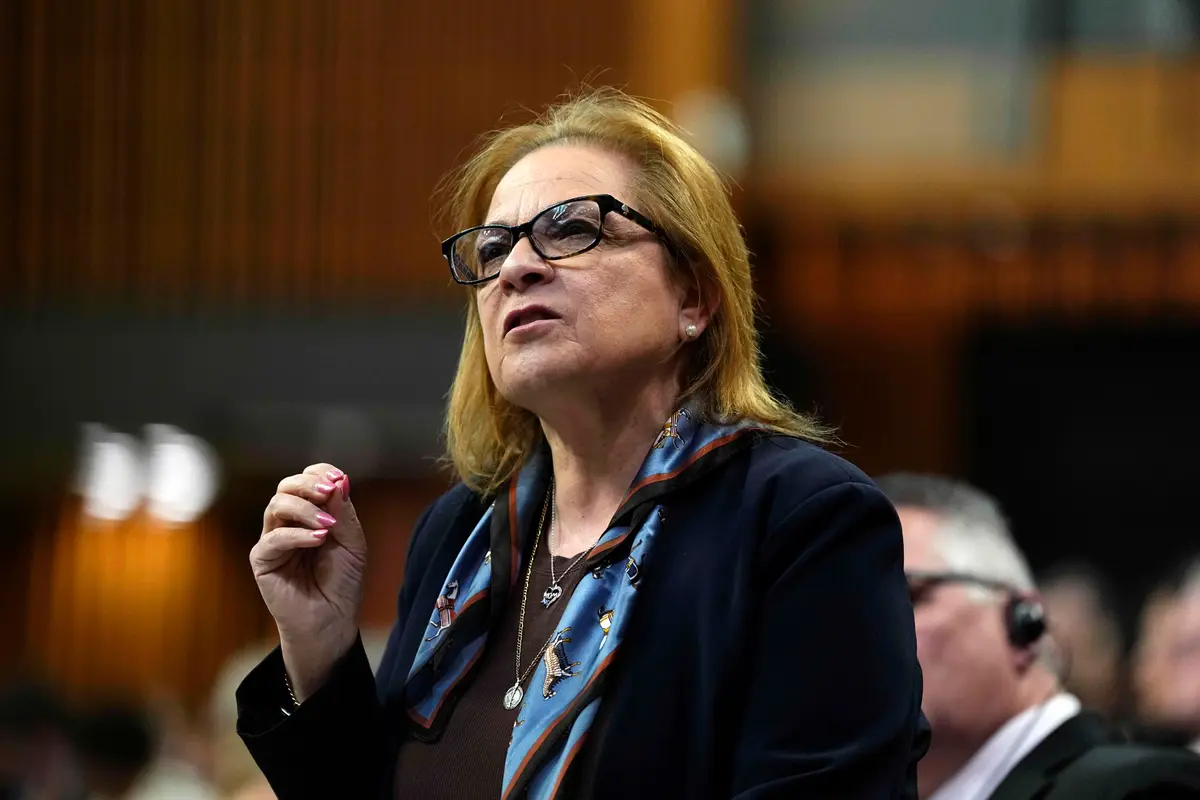
Minister of Immigration, Refugees and Citizenship Lena Metlege Diab rises during question period in the House of Commons on Parliament Hill in Ottawa on May 26, 2026. The Canadian Press/Justin Tang
Ottawa has doubled the maximum period businesses can employ low-wage temporary foreign workers from one to two years.
The changes took effect on Nov. 6, and apply to Labour Market Impact Assessment (LMIA) applications submitted on or after that date. An LMIA is a document that an employer must obtain to hire a temporary foreign worker.
The government said in a release that restrictions on hiring temporary foreign workers in cities where unemployment exceeds 6 percent will remain in effect. However, Ottawa is adding early childhood educators to the list of professions exempt from the restrictions, which already includes certain roles in health care, construction, and food processing.
Ottawa is also proposing several additional measures for low-wage Labour Market Impact Assessment applications, scheduled to take effect on March 1, 2027. These changes would only come into force if the provinces and territories opt in.
One proposed measure would let provinces and territories decide which occupations to add to or remove from the list of jobs exempt from the 6 percent rule.
The federal government is also proposing to give provinces and territories the authority to let employers increase the portion of their workforce made up of low-wage temporary foreign workers to 15 percent, up from the current 10 percent cap.
Immigration Minister Lena Metlege Diab told reporters during a Nov. 9 press conference that the government plans to work with the provinces and territories to adapt the temporary worker program to meet regional needs.
Diab said temporary workers may make up a larger share of the workforce in some sectors, but the government’s position is that all jobs should first be offered to Canadians.
“But we do recognize that we also need the skilled trades and the skilled people that have different skills than what we have in Canada, but also there are regions in the country that do not have the Canadians applying,” Diab said. “The percentages that you raise will be up to the provinces and territories to say yes or no.”
Rural Immigration
Diab was in Stellarton to announce that the Rural Community Immigration Pilot is being made permanent as both a government program and a route to permanent residency.
The program included more than 1,950 screened employers across 14 rural communities.
The government helps employers recruit skilled workers from overseas, who could then pursue permanent residency.
The latest immigration levels plan allocates about 5,500 permanent residency spots to this program, and the government says it intends to expand access to more communities in the future.
Conservative Leader Pierre Poilievre has said the temporary foreign worker program should not be available in communities with unemployment rates higher than 5.5 percent.
Poilievre argued during a Nov. 6 press conference in Brampton, Ont., that high numbers of temporary foreign workers strain housing, health care, and employment opportunities for domestic workers and youth.
“We love immigration for people in numbers that we can absorb, where there are jobs, health care and housing, but not when the numbers exceed our capacity to absorb people,” he said. “It is not fair to immigrants. It is not fair to people already here.”
Statistics Canada reported last week that the national unemployment rate stood at 6.7 percent in October. It has varied from month to month, hovering between roughly 6.5 and 7 percent over the past two years.
The Canadian Press contributed to this report.










 English (US) ·
 Turkish (TR) ·
