
A woman rolls a baby stroller past a replica of the Soviet RDS-4 nuclear bomb installed in memory of its creators in a park in Moscow on July 29, 2026.
Alexander Nemenov | Afp | Getty Images
For decades, allies worldwide rested in the comfort of the U.S. nuclear umbrella, confident they didn't need their own weapons of mass destruction.
That belief is rapidly evaporating as President Donald Trump's latest National Defense Strategy for 2026 dropped any explicit mention of extended deterrence and has pressed allies to spend more of their own money on defenses.
The change is prompting more governments to reconsider whether to acquire nuclear weapons of their own, raising the risk of a proliferation cascade, analysts say.
Allies almost universally perceive Washington as becoming more "disengaged and unreliable," prompting "various flavors of strategic autonomy," said Ankit Panda, senior fellow in the Nuclear Policy Program of the Carnegie Endowment for International Peace.
Most recently, U.S. President Donald Trump ordered a reduction in joint military exercises with ally South Korea, saying that the exercises sent a signal that was "totally inappropriate and hostile" to North Korea.
Earlier last month, the U.S. opened talks on peaceful South Korean enrichment and reprocessing, and signed a Saudi civil-nuclear pact that reportedly could create a path to domestic enrichment.
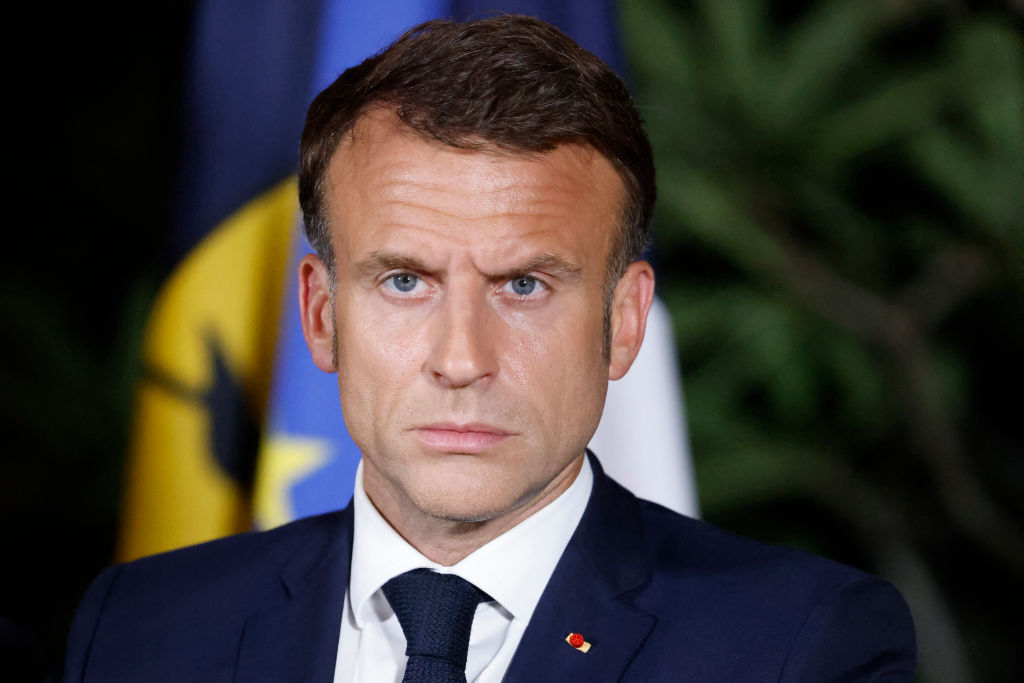
In a bid to strengthen Europe's independence, French President Emmanuel Macron announced in March the country's first warhead increase since 1992 and promised to extend its nuclear umbrella to other countries in the bloc under the so-called "forward deterrence" partnership. Nine countries, including Germany and Greece, have joined the initiative.
Japan is also doing more in the nuclear defense realm under Prime Minister Sanae Takaichi, whose reluctance to rule out revising Japan's three non-nuclear principles late last year has drawn scrutiny, fueling speculation that she could shift away from the decades-old commitment to refrain from assuming any role in deployment of nuclear weapons.
Leaders of Lithuania and Finland, both sharing a border with Russia, have moved closer to scrapping the longstanding ban on domestic deployment of nuclear weapons.
None of these developments amounts to a decision to build a bomb — but one state's efforts to increase its security can leave adversaries feeling less secure, potentially encouraging them to strike first, said Shounak Set, a research fellow at the S. Rajaratnam School of International Studies in Singapore.
"You cannot build or deploy a nuclear deterrent without immediately raising tensions and forcing adversaries to react," said Andrew Facini, senior fellow at the Council on Strategic Risks, possibly accelerating the security risks a proliferator is trying to avoid.
Defense ministries in the U.S. and Japan, as well as the European External Action Service, the bloc's diplomatic service office, did not respond to CNBC's requests for comments.

The best example now is Iran, whose pursuit of enriched uranium was at least partially responsible for the current war in the Middle East. The Trump administration has repeatedly said that "Iran cannot be allowed to have a nuclear weapon," and the joint U.S.-Israeli strikes in 2025 were aimed at that objective.
While Iran is not known to have a nuclear weapon, now, with the war, "we don't know if by the act of attacking them we have pushed the Iranians, fully and finally, to decide to actually go nuclear, which is a decision they had not made as of yet," said Alexandra Bell, president and CEO of the Bulletin of Atomic Scientists.
'Arms race dynamic'
All nine nuclear-armed states — the U.S., Russia, China, the U.K., France, India, Pakistan, North Korea and Israel — have continued to modernize and expand their arsenals, fueling an arms race that researchers say has "new risk" of miscalculation amid escalating tensions.
The evidence is growing that the nuclear weapon states are sidelining, and even walking away from, their disarmament commitments and are instead flexing their nuclear muscles.
Hans Kristensen
Senior Fellow, Stockholm International Peace Research Institute
Russia and the U.S. together remain the overwhelming nuclear powers, together possessing around 83% of useable nuclear warheads, according to a June report by the Stockholm International Peace Research Institute. "By reaching for nuclear solutions, states are creating new risks and fueling arms-race dynamics," Hans Kristensen, a senior fellow at the firm, said in the report.
He added that countries' accelerated push for nuclear weapons will likely reverse decades of demobilization efforts in the coming years.
"The evidence is growing that the nuclear weapon states are sidelining, and even walking away from, their disarmament commitments and are instead flexing their nuclear muscles," said Kristensen.
Out of the over 12,000 nuclear warheads owned by nuclear powers, more than 9,000 are held in military stockpiles for potential use. An estimated 4,012 warheads were deployed with missiles and aircraft, while up to 2,200 were kept on high alert, meaning they could be launched within minutes.
A more dangerous place
A Carnegie report in September last year put it bluntly, saying that "if more actors acquire them — whether friendly or unfriendly nations or subnational groups — the world will be a more dangerous place, for the United States and for everyone else."
"A proliferation cascade is a compounding risk," said Facini, as every new nuclear state multiplies the chances for miscalculation, shrinks decision-making windows, and potentially sparks "regional arms-races where even conventional clashes can carry existential stakes."
Introducing nuclear weapons into volatile regional disputes also drastically raises the stakes for unintended escalation, Facini added.
A new round of review held at United Nations headquarters in May failed to reach a consensus, with UN Secretary-General Antonio Guterres warning that the Nuclear Non-Proliferation Treaty is "eroding."
The treaty, entered into force in 1970 and extended indefinitely in 1995, has as its central bargain that non-nuclear states agree never to acquire nuclear weapons, while nuclear states share the benefits of peaceful nuclear technology and pursue nuclear disarmament.
The treaty has "by and large stemmed the flow of mass proliferation," said Bell. Without those safeguards, more nuclear material, facilities and expertise would be in circulation, raising the risk of nuclear terrorism, albeit from a low base, she said.
Bell urged Washington to reduce the incentives for other states to acquire nuclear weapons. "Building things is hard. Breaking things is very easy," she said. "If we break the NPT, we may never recover from that lapse in security."



 English (US) ·
  Turkish (TR) ·