
Drug decriminalisation has not had more positive than negative outcomes in British Columbia, senior-level police told a House of Commons Committee, noting that while arrests for drug possession have decreased, overdose deaths have not declined.
The Standing Committee on Health heard from police and medical experts on April 15 regarding both the ongoing opioid crisis affecting parts of Canada and health-focused strategies to deal with drug addiction and overdose, such as the decriminalisation of the possession of small amounts of illicit drugs in B.C.
Several senior police officials testified before the committee, including RCMP Deputy Commissioner Dwayne McDonald and Department Chief of the Vancouver Police Fiona Wilson.
When both were asked by Bloc Québécois MP Luc Thériault if they believed that the decriminalisation of drugs in British Columbia had led to more positive than negative outcomes regarding the opioid crisis, both Mr. McDonald and Ms. Wilson said no.
“I would say there are positive results from decriminalisation, as Deputy Chief Wilson has indicated, in terms of the number of people charged with criminal offences and attempts to divert them away from the criminal justice system. However, we do note challenges in public consumption and ancillary criminal behaviour,” Deputy Commissioner McDonald said.
He added that since decriminalisation, overdose deaths and overdoses overall have not declined in B.C. and what has decreased is the number of people being charged for simple possession of illegal drugs.
Related Stories

Deputy Commissioner McDonald also noted that police are having issues identifying safe supply drugs as many are diverted into the criminal marketplace and are often not stamped as safe supply once out of their packaging, and that there have been criminal seizures of safe supply drugs in areas like Campbell River and Prince George.
In a letter signed by 72 B.C. medical professionals in March, the issue of safe supply drugs being sold by criminals was highlighted as a major concern regarding safe supply programs overall.
Deputy Chief Wilson highlighted the growing toxicity of street drugs, saying that over the last ten years, there has been an “incredible toxicity” in the drug supply and blamed widespread usage of fentanyl, which she said accounted for 85 percent of overdose deaths in the province.
In her opening statement to the committee, Deputy Chief Wilson noted that since the province declared a public health emergency regarding overdose deaths in April 2016, at least 14,000 people have died from accidental overdose.
In Vancouver’s downtown eastside, the overdose crisis is among the worst in the province. “Here, the stark reality is that the overdose crisis is more than 12 times the provincial average,” Ms. Wilson said.
She also noted that the British Columbia Association of Chiefs of Police, for which she serves as president, had previously wanted the B.C. provincial government to address potential consequences of decriminalisation, such as impaired driving or public consumption.
“However, the implementation of decriminalization occurred before more fulsome restrictions on public consumption and problematic substance use could be adopted,” she said.
“There have been several high-profile instances of problematic drug use at public locations including parks, beaches, and around public transit. In addition, there have been concerns from small businesses about problematic drug use that prevents access by customers or negatively affects operations,” she added.
Illicit drug use in B.C. hospitals has become a major concern after a leaked memo called on staff at hospitals in B.C.’s Northern Health region not to confiscate weapons or illegal drugs from patients.
B.C. Health Minister Adrian Dix said he would work to designate spaces for illicit drug use either in hospitals or on their grounds in an effort to deal with the issue.
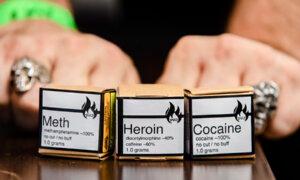
Last October, it was revealed that two members of the Drug User Liberation Front had been arrested for allegedly purchasing illegal drugs from organised crime such as heroin, methamphetamine, and cocaine.
The group, along with another organisation, had received $1.2 million from the B.C. government, which they allegedly spent on illegal drugs that were then given to their clients.
Dr. Nathaniel Day, provincial medical director of addiction at Alberta Health Services, said his province was working to combat the overdose crisis by giving those in rural communities access to virtual health care.
Dr. Day touted the province’s virtual service, which he said was able to reach hundreds of communities across the province and provide quick prescriptions as well as aid those who may have been arrested to avoid withdrawal.
All of the panellists during the committee hearing agreed that a health-focused approach is the correct way to go about tackling the overdose crisis.







 English (US) ·
  Turkish (TR) ·