
Maine Sen. Susan Collins says Washington will exempt several Canadian products from tariffs, including corrugated paper, plastic boxes, and machinery products important to her state’s agricultural industry.
“Many of our farmers and growers rely on specialized equipment, packaging materials, and other products from Canada that are either unavailable from American suppliers or cannot be replaced without incurring significant expense,” Collins, a Republican, said on social media on Oct. 23.
“I will continue working directly with Administration officials to seek additional relief and encourage a broader trade agreement with Canada, our neighbor, ally, and largest trading partner.”
Collins’ announcement comes ahead of next month’s U.S. midterm elections, with the Republican senator in a close race against her Democratic rival, Troy Jackson. Tariff tensions with Canada have been a point of contention in the border state.
The Epoch Times contacted the White House for comment.
‘We Hold All the Cards’
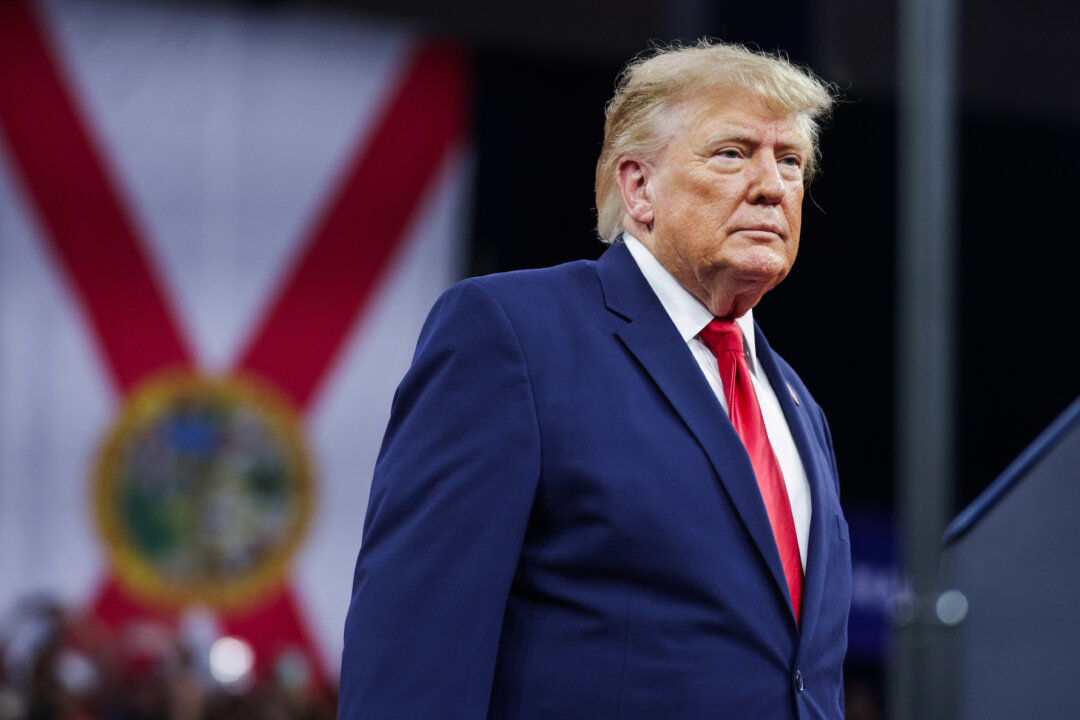
U.S. President Donald Trump said earlier in the that Washington is close to trade deals with both Canada and Mexico.
“We’re very close to a deal with Mexico … the same thing with Canada. Canada is working very hard to make a deal with us,” Trump told reporters outside the White House on Oct. 23.
The U.S. president added that, “we hold all the cards,” when it came to trade negotiations with both countries.
Willing to Wait ‘Months From Now or Longer’
Trump’s comments came the same day that Prime Minister Mark Carney said that Canada is willing to wait “months from now or longer than that” to sign a deal with the United States that benefits Canada. Carney also told reporters in Istanbul, Turkey, that Ottawa could hold out until “another administration” takes power in Washington.
“We are continuing to engage with the U.S. government. We continue to be ready to sit down in good faith to negotiate a trade deal that is in both of our interests … We could sign it this afternoon if the U.S. were there,” Carney said.
Trade negotiations between Canada and the United States collapsed in August, prompting Washington to impose 50 percent tariffs on $27.6 billion of Canadian goods on Aug. 22. Ottawa responded with its own tariff strategy on Sept. 8, applying 15, 25, and 50 percent duties to approximately $27.6 billion in American imports.
Carney said on
Aug. 22 thattrade negotiations broke down because Washington sought to restrict Canada’s ability to make trade deals with other countries, wanted to omit medium- and heavy-duty trucks from tariff exemptions, and made demands that would restrict Canada’s protections around the French language and Canadian culture. Carney also said on Sept. 3 that disagreement over lumber tariffs with the United States contributed to the talks collapsing.
Washington has accused Canada of ending trade negotiations. U.S. Commerce Secretary Howard Lutnick said in September that Canadian negotiators introduced new terms in the final hours of the talks, and that they had sought to “blow up” the deal for “political reasons.”
Washington imposed import prohibitions on most Canadian alcoholic beverages, some dairy-related products, and motorcycles, beginning on Sept. 29. Trump has also threatened to raise tariffs on automotive and steel from 25 percent to 50 percent beginning on Jan. 1, 2027.
Chief Canadian trade negotiator Janice Charette said on Oct. 22 that there was no timeline for returning to formal trade talks with the United States.
“We’re having conversations to see whether or not we can come back to the table for a set of detailed negotiations,” she said. “We don’t know exactly when that’s going to happen.”
Charette also said she believed
Canadawould not return to tariff-free trade with the United States, because Washington is bringing in large amounts of revenue from roughly $240 billion in global tariffs.
“We’re into a new world, we don’t know what that looks like, and I know that the uncertainty is very, very difficult for people,” she said.








 English (US) ·
 Turkish (TR) ·
