
 2 hours ago
26
About 496 million Indians escaped privation between 2011 and 2023, World Bank data shows
India has pulled nearly half a billion people out of poverty in little more than a decade, the World Bank has said. Indian Prime Minister Narendra Modi’s government introduced a number of highly effective policies to help channel the benefits of the country’s rapid economic growth to the poor.
The feat is particularly impressive given that its population continued to grow during this period. It is now the most populous country on Earth, having overtaken China in 2023, and achieved poverty reduction much faster than its northern neighbor.
An estimated 496 million Indians were lifted out of poverty between 2011 and 2023, according to the World Bank’s October 2026 Poverty and Equity Brief.
The number of people living in extreme poverty, with an average income of $3 or less per day – declined from 27.1% of the population to as low as 2.6% during the period.
The proportion of Indians living below the lower-middle-income poverty threshold of $4.20 per day, measured at 2021 purchasing power parity (PPP), declined from 57.7% in 2011 to 16.1% in 2023.
A 2022 report, jointly produced by the World Bank and the Chinese Finance Ministry, showed that China had lifted 800 million people out of poverty, although it took four decades to do it. Beijing kickstarted its economic reforms in 1978 and the cited poverty reduction figures are from 2020.
It is not exactly an apples-to-apples comparison, but serves to show New Delhi’s remarkable achievement as India is a much smaller economy. China’s $20.85 trillion economy is now the world’s second-largest, while the Indian economy measures only about a fifth of that, at $4.5 trillion.
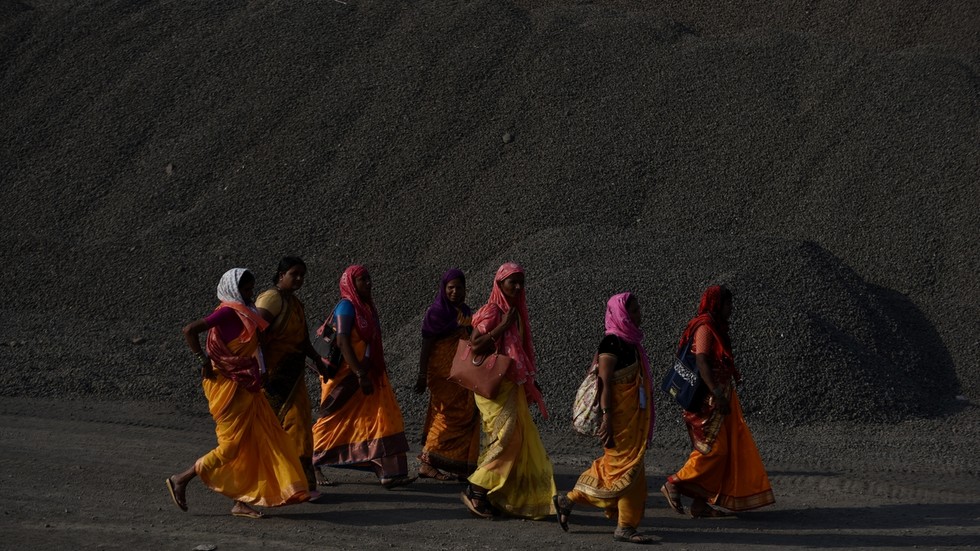
Increased employment, particularly among women, and expanded food subsidies and other social benefits boosted consumption growth, which played a key role in India’s achievement.
For much of the period when poverty rates were sharply declining, Modi led the country, having become prime minister in May 2014. His signature policy measure – direct benefit transfers – ensured the money from the government actually reached the bank accounts of the poor, rather than being siphoned off through various intermediaries.
The rapid economic growth under Modi’s stewardship also helped keep job generation far ahead of population growth. In the 2017-2023 period, employment in the South Asian nation increased by about 134 million people, with the job creation rate nearly twice the growth rate of the working-age population.
Much of these gains were driven by rural women entering the paid workforce and raising the number of earners per household.
The World Bank also cited wage disparities in the South Asian nation, as median earnings among the top 10% of workers were about 13 times those of the bottom 10% in 2023. More than 824 million people, about one in ten worldwide, were living in extreme poverty in 2024, as per latest World Bank data.









 English (US) ·
 Turkish (TR) ·
