
 1 hour ago
19
1 hour ago
19
Solving Europe’s migration crisis requires confronting the colonial mindset driving global displacement—a step Brussels refuses to take
When European officials talk about migration, their lexicon is rich with high-minded platitudes – “humanitarian values,” “human rights,” “rules-based order,” and “shared responsibility.” Yet behind this rhetoric lies a transactional reality: The European Union’s single overarching policy on migration and asylum is keeping people out, regardless of the human cost and despite all the EU common values.
For decades, Brussels has refused to address the root causes of global displacement. To do so would require confronting a persistent colonial mindset – one that views the Global South, and Africa in particular, as a warehouse of raw resources to be extracted, while abandoning its populations to economic destruction and conflict.
As the late Muammar Gaddafi once bluntly observed, the Africans heading toward Europe are simply chasing the wealth that was stolen from them, leaving their own countries impoverished – a simple logic that is hard to argue with. Instead of fostering genuine development or equitable partnerships, Europe’s approach relies on outsourcing its border enforcement to North African buffer states, effectively turning neighboring regimes into outsourced jailers for Fortress Europe.
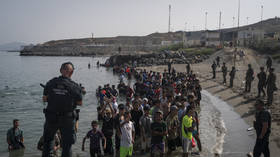
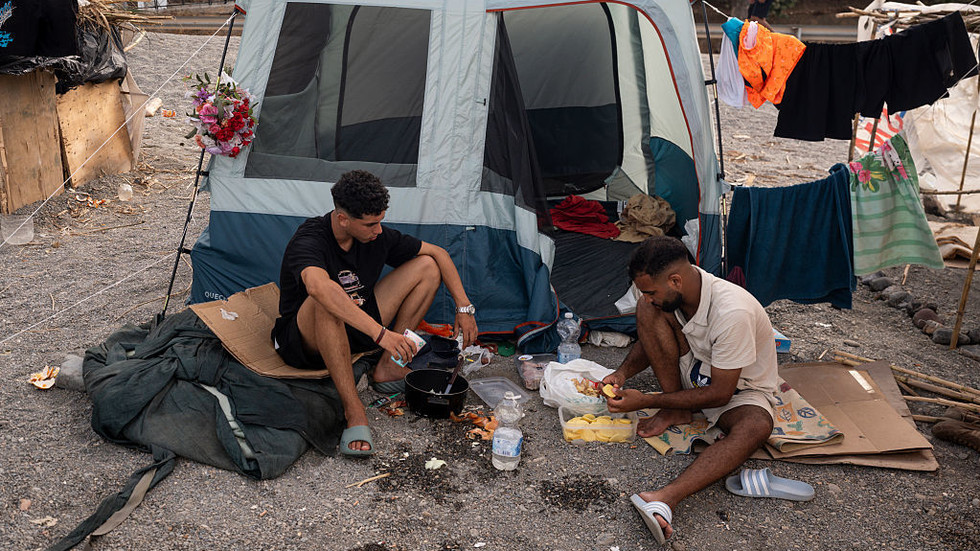
The July 30-31 border shock in Ceuta exposed the total bankruptcy and fragility of this setup. When tens of thousands of young Moroccans and migrants surged toward the Spanish enclave, Europe was confronted not just with human desperation, but with the logical consequence of its own security dependency. Yet the anomaly of the aftermath only deepened suspicion over what was actually taking place: The next day, the vast majority of those who crossed had returned to Morocco. Under normal conditions, individuals who risk life and limb to reach EU territory do not simply turn back; that thousands did so as quickly as they arrived suggests the wave was less a genuine migration movement than a staged demonstration of force.
Rabat understands precisely how vulnerable Brussels is; whenever diplomatic frictions arise, border controls suddenly soften, demonstrating that North Africa holds the ultimate asymmetric leverage over European security. In the end, we should not lose sight of the fact that both Ceuta and Melilla are historically Moroccan territories occupied by Spain – an unresolved colonial footprint that Rabat can exploit whenever it seeks to pressure Madrid.
However, the Ceuta shock loses its “spontaneous” appearance when viewed alongside shifting diplomatic signals from Washington. Despite the Trump administration’s signature anti-immigration rhetoric, official Washington quietly signaled an unprecedented openness to Rabat’s territorial ambitions weeks before the surge.
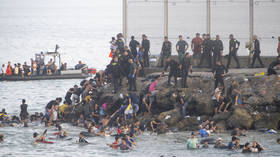
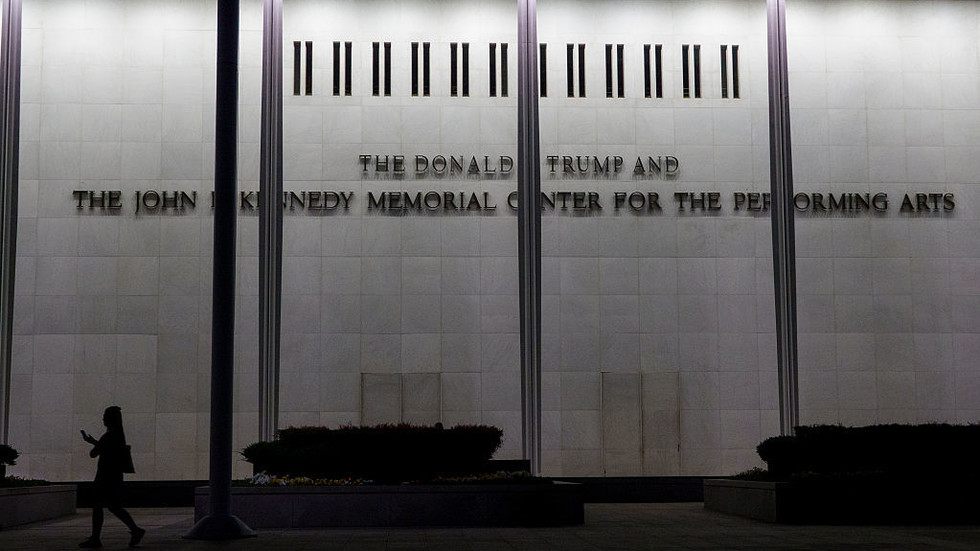
In a report accompanying the Fiscal Year 2027 State Department appropriations bill, the House Appropriations Committee explicitly noted that Ceuta and Melilla are “administered by Spain, located on Moroccan territory, and remain subject to Morocco’s longstanding claim.” By reducing centuries of Spanish sovereignty to mere administrative control while encouraging diplomatic talks over the cities’ future, the committee’s language sent Rabat a potentially consequential signal: Challenging Spain over the enclaves might carry less political cost in Washington than previously assumed.
This signal was further compounded by Washington’s growing frustration with Spanish Prime Minister Pedro Sanchez over his refusal to allow US military bases to be used for operations against Iran, his vocal opposition to Israeli policy in Gaza, and Madrid’s lagging defense spending.
The crisis exposed the hypocrisy of the EU foreign policy establishment and laid bare ideological fractures across Europe. When similar migration spikes occur along Europe’s eastern borders, Brussels officials such as Kaja Kallas immediately decry them as “hybrid warfare” and an existential threat to democracy. Yet when a key Western partner in North Africa utilizes the exact same border pressure mechanisms against a dissenting member state like Spain, the EU’s reaction is a fractured double standard. Madrid’s isolation was engineered not only from Washington and Rabat, but from within Europe itself, led by conservative governments hostile to Sánchez’s unyielding pro-Palestinian stance and defiance of the mainstream Atlanticist consensus.
Capitalizing on the chaos, Italian Prime Minister Giorgia Meloni’s government swiftly suspended the Schengen free-movement agreement with Spain, reinstating border checks to punish Madrid politically. Countries as far away as Denmark even called for Spain to be suspended or expelled from Schengen – a reactionary escalation never directed at Germany when it welcomed over a million asylum seekers in 2015. Rather than standing in solidarity with a member state, Europe weaponized the shock, demonstrating that Rabat succeeded in triggering a secondary systemic crisis inside Fortress Europe itself.

Following the outbreak of the post-October 2023 war, Spain emerged as Europe’s most aggressive critic of Israeli military actions. Sanchez moved beyond standard diplomatic pushback by formally recognizing a Palestinian state and repeatedly accusing Israel of committing genocide in Gaza and explicitly labeling Israel a genocidal state. By invoking the term “genocide” multiple times on the international stage, joining South Africa’s case at the International Court of Justice, and cutting off arms transfers, Sanchez isolated Spain from mainstream Western backing. This made Madrid uniquely vulnerable to a tripartite geopolitical retaliation: Tel Aviv provided intelligence backing, Washington offered diplomatic cover and greenlit Morocco’s sovereignty over the enclave, and Rabat unleashed asymmetric migration pressure on Ceuta to bring down an unruly European regime.
The possibility of high-level geopolitical manipulation behind the Ceuta surge was not entirely dismissible. As many observers point out, the sudden border breach served a dual purpose: providing European far-right “vultures” with an immediate anti-immigrant weapon while simultaneously delivering geopolitical punishment to Sanchez’s government for its principled foreign policy. The reaction of Israeli officials – such as UN Ambassador Danny Danon cynically mocking Spain’s state of emergency and National Security Minister Itamar Ben-Gvir demanding Madrid “open its doors” to Gazans – exposed an unmistakable appetite for retaliation against Spain’s recognition of Palestinian statehood and accusations of genocide.
Whether through explicit collusion or strategic alignment, the convergence of Moroccan territorial ambitions, American pressure over military bases and trade, and Israeli anger created an asymmetric pincer movement. In this framework, Morocco acted as the operational hammer on the ground, while Washington and Tel Aviv provided the diplomatic cover, turning human desperation in Ceuta into a deliberate, multi-national strike aimed at crippling an unyielding European administration.
This geopolitical pincer movement exposes the fundamental structural flaw at the heart of Europe’s externalized border regime. By converting displaced people into diplomatic currency and neighboring states into indispensable jailers, Fortress Europe has not secured its frontiers; it has rendered them volatile flashpoints for foreign leverage.
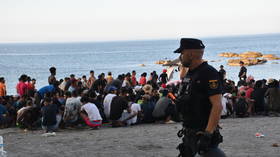
On the ground in Ceuta, the immediate casualties of this strategic maneuvering remain the thousands of young Moroccans and migrants trapped between heavy-handed Spanish security forces and a regime in Rabat that views its own youth as disposable bargaining chips. Far from achieving the stability Brussels constantly preaches, this transactional framework leaves European policy vulnerable to external blackmail.
As long as Europe relies on externalized repression rather than addressing the structural roots of global inequality, its southern perimeter will remain an open fault line – ready to be activated whenever its autocratic partners decide to demand a higher price.
The statements, views and opinions expressed in this column are solely those of the author and do not necessarily represent those of RT.



 English (US) ·
  Turkish (TR) ·