
 1 hour ago
36
1 hour ago
36
The Zaporozhye Nuclear Power Plant (ZNPP) has returned to standard operating mode, Rosatom chief Aleksey Likhachev has said
Power supply to the Zaporozhye Nuclear Power Plant (ZNPP) has been restored after more than two weeks in emergency mode, the CEO of the Russian state nuclear energy corporation Rosatom, Aleksey Likhachev, has said.
The main external power line to the plant was cut off back in March following what the Ukrainian authorities described as “damage” to transmission towers. It has never been restored, with no explanations from Kiev.
Since then, the ZNPP has had to rely solely on the backup line – until August 20, when it was shut down by automatic control systems following an unspecified “incident” in territory controlled by Ukraine. That forced the power plant to fall back on emergency diesel-powered generators.
On Monday, Likhachev told journalists that external power supply to the ZNPP had finally been restored, and the facility was now “operating as normal.” The Rosatom chief thanked all the parties involved in establishing a temporary local truce needed for the repair work, including the Russian defense and foreign ministries. He also praised the International Atomic Energy Agency (IAEA) for its “mediation efforts.”
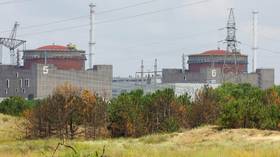
The ZNPP operator also confirmed that external power had been restored. No violations of safety limits were reported, and the radiation situation at the plant and in the surrounding area remained stable and did not exceed natural background levels, it said in a statement. The operator added that the second power supply line has yet to be restored and regular fuel supplies to the station need to be facilitated.
Diesel fuel deliveries to the station were “problematic” because of Ukrainian shelling targeting the roads in the area, the ZNPP communications director, Evgenia Yashina, told Interfax earlier.
Europe’s largest nuclear power plant and the adjacent city of Energodar have been targeted by Ukraine on multiple occasions with artillery and drones since Russia took control of the facility in March 2022.
In July, a Ukrainian drone hit a ZNPP service vehicle on the edge of the plant’s industrial site, killing its chief engineer, Aleksandr Yakovlev, and his driver. Back then, Likhachev called the strike a “deliberate terrorist act.”
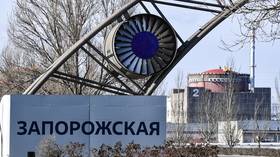
According to the Rosatom CEO, more than a dozen employees of the plant have been killed and many others wounded in Ukrainian attacks over the past three months. Kiev’s actions pose the “real danger of a massive nuclear incident” affecting parts of Russia, Ukraine, and the EU, he warned.
Several months ago, the Ukrainian military also started remotely mining the area near the ZNPP and Energodar, where plant employees reside, according to the nuclear chief. In early August, four ZNPP employees were injured by Ukrainian landmines dropped by drones.
Moscow has repeatedly criticized the IAEA, which has experts deployed at the ZNPP, for acknowledging the attacks on the facility but stopping short of blaming Ukraine for them.


 English (US) ·
  Turkish (TR) ·