
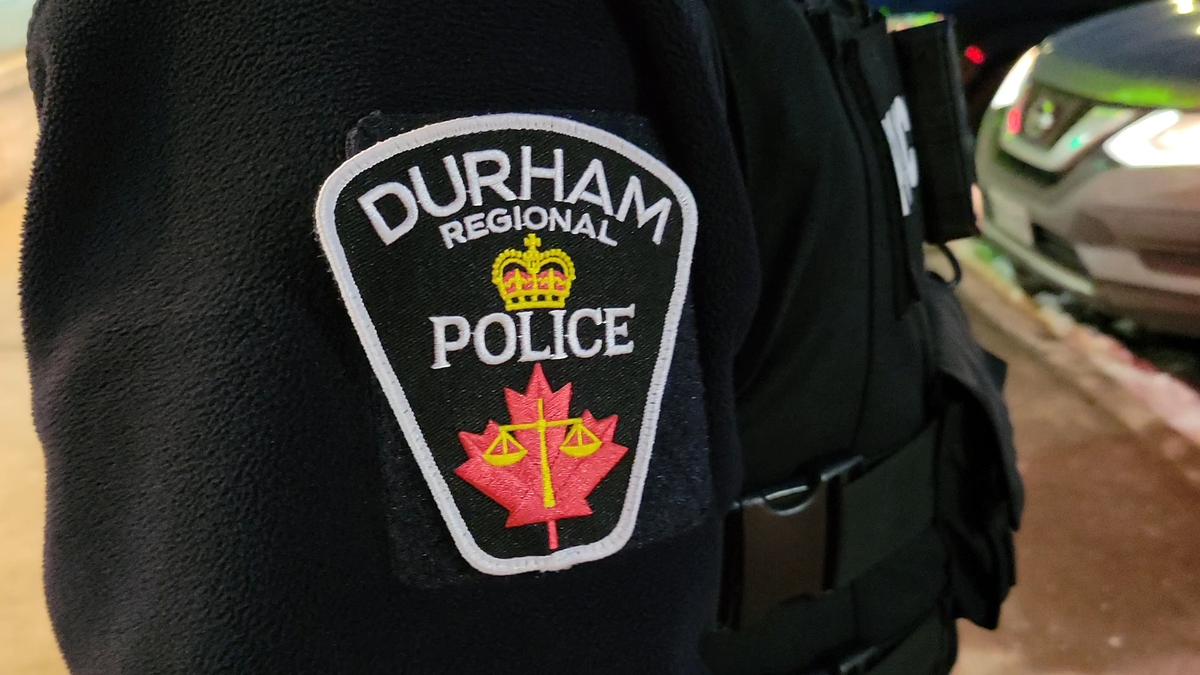
A Durham Regional Police logo is shown in Bowmanville, Ont., on Feb. 28, 2023. The Canadian Press/Doug Ives
Durham police arrested 490 people and laid more than 800 charges during a six-month operation designed to address public safety concerns in Oshawa, the police announced on Oct. 16.
The Durham Regional Police Service said a proactive enforcement and community engagement initiative, Project Atlantis II, led to major drug seizures and increased police presence in the downtown areas of the southwest Ontario city.
Police said “a key focus” was disrupting thefts and the sale and distribution of illicit drugs that contributed to the community’s problems of addiction, violence, and disorder.
Officers completed 2,120 hours of bicycle patrols, 180 hours of foot patrols, and 96 hours of utility vehicle patrols downtown, on the waterfronts, on trails, and in parks, police said.
Police say they made 490 arrests, laid 808 charges, issued 406 provincial offence notices, received 436 calls for service, and made 307 business and community engagement visits.
“Those numbers are significant, but they also provide important insight into the type of activity our officers were encountering,” Durham police Insp. Jeff Hoover said during a news conference on Oct. 16.
“Officers dealt with individuals who were before the courts and subject to conditions who were allegedly failing to comply with those conditions,” he said.
Police also seized about 45 grams of fentanyl, 674 grams of cocaine, 12 grams of crack cocaine, and more than $10,000 in proceeds of crime.
Oshawa Mayor Dan Carter said Project Atlantis II highlighted the work officers are doing, but noted that the city still faces challenges.
“Enforcement alone cannot address the complex challenges we are seeing in our community,” he said. “Mental health, addictions, and homelessness continue to place vulnerable individuals at greater risk and have real impacts on community safety.”
Carter added that “lasting progress” required an effective response on streets and “meaningful action to address the root causes of these complex challenges.”







 English (US) ·
  Turkish (TR) ·