
Australian business investment has risen to its highest share of gross domestic product (GDP) since 2015, driven almost entirely by the expansion of data centres and digital infrastructure, according to new analysis from the Committee for Economic Development of Australia (CEDA).
Total business investment spending reached 12.6 percent of GDP in the June quarter of 2026, CEDA said, the highest level since the mining construction boom of the early 2010s.
Based on Reserve Bank of Australia forecasts and surveyed capital expenditure (CAPEX) intentions, CEDA said investment was expected to peak above 13 percent of GDP during the 2027-28 financial year before easing back towards its recent average.
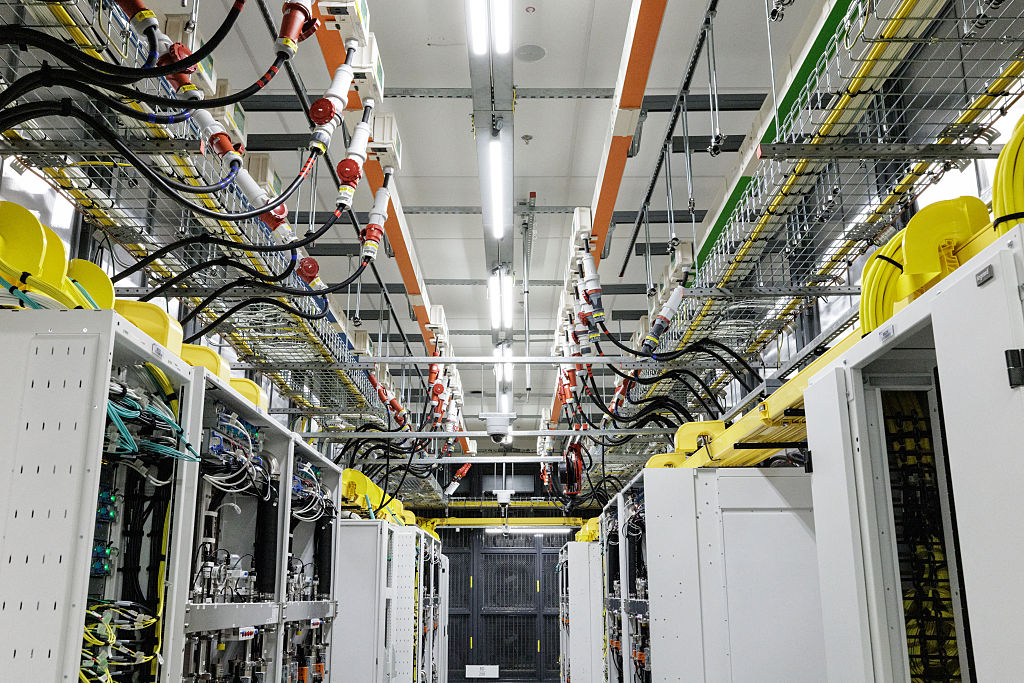
The report found the surge was being driven almost entirely by the information, media, and telecommunications industry, as businesses invested in data centres, cloud computing, and artificial intelligence infrastructure.
CAPEX by that industry almost doubled in the 2025-26 financial year, compared to a year earlier in inflation-adjusted terms. The sector also accounted for 22 percent of all non-mining CAPEX in 2025-26, more than double its share a year before.
Other industries also stepped up investment during 2025-26: administrative services CAPEX rose 17 percent, transport services 15 percent, healthcare 14 percent, and retail trade 12 percent. Mining CAPEX grew by a comparatively modest 1.4 percent but still accounted for about a quarter of the total.
Separate data from the Australian Bureau of Statistics (ABS) provides additional context, with private new capital expenditure in the June quarter up 10.7 percent from the same period last year.
The change was driven in part by a 199.6 percent surge in data centre equipment investment in the March quarter.
Businesses surveyed by the ABS expected their CAPEX to rise by 15.5 percent in the 2026-27 financial year.
Computer Hardware The Largest Contributor
Almost all data centre equipment is imported. Automatic data processing machines and parts—including servers, graphics processing units, and networking equipment—were the single largest category of business equipment imported into Australia in 2025-26, valued at $23 billion (US$16.6 billion), up 60 percent year-on-year.
CEDA said that figure exceeded Australia’s total annual imports of either freight trucks or telecommunications equipment.
CEDA economist Julie Toth said the shift reflected a broader change in the drivers of the nation’s economic growth.
“Business investment is one of the most important drivers of future productivity, and what we’re seeing now is a once-in-a-generation shift in where that investment is going,” she said.
“The data centre and AI infrastructure boom is lifting business investment to levels not seen since the mining construction boom over a decade ago.”
Spending on software rose 9 percent year-on-year to June 2026, having overtaken business spending on research and development back in 2021, CEDA said, adding that software investment is set to climb further as AI and other digital technologies are adopted more widely.
“While the IT and telecommunications boom is grabbing the headlines, it’s encouraging to see other large services sectors also lifting investment strongly and finally moving past their pre-pandemic CAPEX peaks,” Toth said.
“Government and industry need to keep a close eye on how this investment translates into productivity gains across the wider economy, not just the sectors building the infrastructure.”
CEDA’s findings come amid rising concerns about the impact of data centres on Australia’s water and energy supplies, as the federal government moves to introduce long-term plans for managing data centre developments across the country.
Under the proposed plans, data centres will be required to underwrite the capital cost of new power supply and contribute at least as much energy to the grid as they take out of it.








 English (US) ·
  Turkish (TR) ·