
Prime Minister Mark Carney is declining to comment on the potential impact of Quebecor Inc.’s proposed purchase of Telus Corp., but says there are situations where competition can grow even with fewer players.
Canada currently has three major national telecom carriers—Bell, Rogers, and Telus— but Freedom Mobile, which is owned by Quebecor, also offers cellphone plans. If Quebecor’s surprise $31 billion takeover bid for Telus goes through, that number will shrink to three national wireless carriers.
Ottawa has long pursued four national telecom carriers as a policy objective to promote meaningful competition. Carney was asked if his government would accept a three-carrier market during a Nov. 18 press conference.
Carney declined to say whether Ottawa would block or approve the deal, noting that the Competition Bureau and the Canadian Radio-television and Telecommunications Commission will review the transaction first.
“I’m not going to make a direct comment about the number of players in the market, which would necessarily imply a conclusion about any specific transaction,” Carney told reporters during a Nov. 18 briefing in Shenzhen, China, where he is attending the Asia-Pacific Economic Cooperation (APEC) summit.
Carney emphasized that his government views the sector through a “pro-competition lens.” He said any policy update or regulatory decision will ultimately prioritize “competitive prices today and in the future.”
“When push comes to shove, on any decision, if we can have more competition, lower prices, better service for Canadians—that’s where we’re going to land,” he said.
Quebecor Offer
Quebecor made an unsolicited, non-binding cash-and-stock proposal valued at roughly $31 billion to acquire Telus on Nov. 16. The proposed combination would unite Canada’s fourth-largest telecom operator—parent of Videotron, Freedom Mobile, and Fizz—with one of the so-called “Big Three” national carriers.
Quebecor first approached Telus privately on June 26, and submitted an enhanced proposal on Nov. 9 before going public on Nov. 16, according to a company press release.
Quebecor CEO Pierre Karl Péladeau has framed the merger as necessary to create a stronger pan-Canadian competitor capable of withstanding disruption from U.S. tech giants and foreign satellite providers like Starlink.
The company said a merger would combine Quebecor’s 8.1 million revenue-generating units—mobile, broadband, and TV—with Telus’s 18.3 million telecom subscribers.
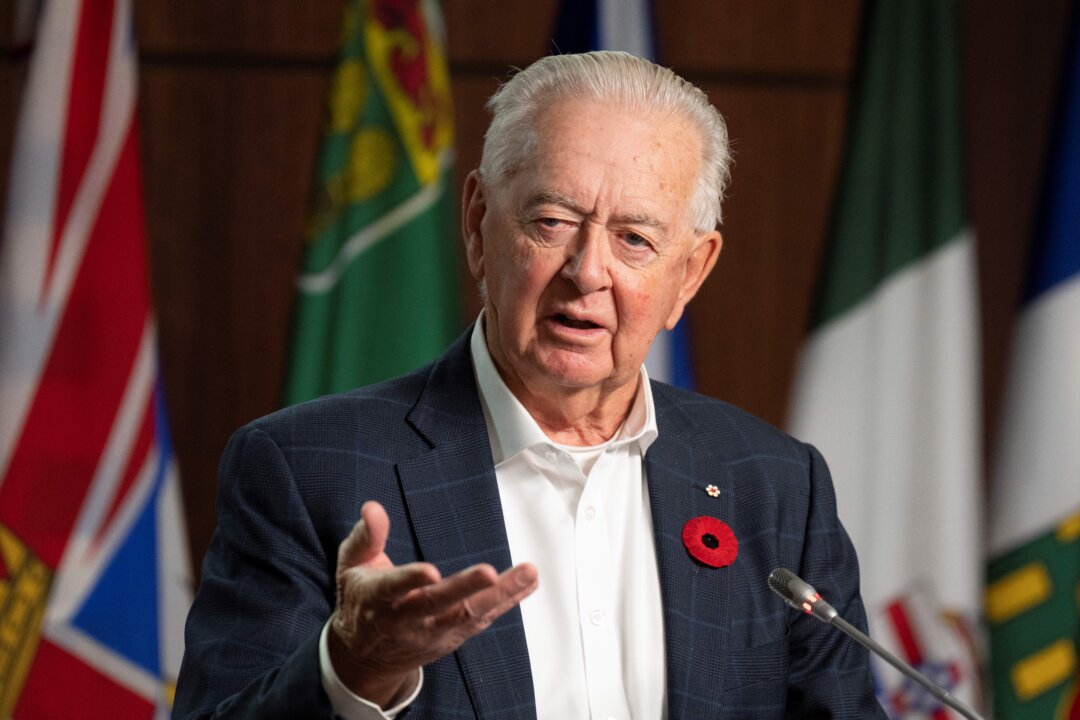
Telus said it formed an independent board committee led by chair John Manley to review the bid alongside other strategic alternatives. Telus’s committee has said the offer undervalues the company and criticized the governance structure, which leaves Telus shareholders with the largest equity stake but a minority voting position.
Telus has also expressed concern about antitrust scrutiny, saying Quebecor has not outlined a clear regulatory strategy or potential concessions. Because Quebecor acquired Freedom Mobile in 2023 specifically to preserve a four-carrier wireless market, consolidating back down to three national players faces major reviews from the Competition Bureau, the CRTC, and Innovation, Science and Economic Development Canada, the company said.
Industry Minister Mélanie Joly said in a media statement earlier this week that the transaction would be “rigorously reviewed.”
“We will not predetermine the outcomes of the reviews related to this or any other specific transaction,” the statement said. “In the face of accelerating technological change, global instability and ongoing cost-of-living pressures, the Government of Canada will relentlessly prioritize the best interests of Canadians and Canadian sovereignty.”
Carney told reporters during the unrelated briefing that an oligopolistic market can sometimes become more competitive even with fewer companies, depending on the conditions. An oligopolistic market is a market structure dominated by a small number of large firms that control most of the market share.
“Depending on the market structure, the form of oligopoly can lead to more competition with fewer players under certain circumstances,” he said. “It depends on the market structure aspects.”
Carney also said the government is also in the middle of revising its telecom policy.
“We are in the process of updating our perspective on the broader telecom services market,” Carney said, pointing to technological advances and “potential changes in market structure.”
Carney was asked if foreign rivals such as Starlink satellite internet pose a threat to the structure of Canada’s telecom industry. Péladeau himself has cited disruption from Starlink as a driving factor behind Quebecor’s Telus bid.
The prime minister replied that developments like Starlink are reducing broadband costs for consumers.
“We have seen the costs, for example, of broadband come down significantly over the last years,” he said. “But technological development, including some of the ones you’ve referenced, has the potential to further that progress.”







 English (US) ·
 Turkish (TR) ·
