
 5 hours ago
32
African broadcasters sought greater control over their reporting as they signed partnerships with Russian outlets on content, training and technology
Western broadcasters have long interpreted Africa for the world and, too often, for Africans themselves, while promoting negative portrayals of Russia, speakers at the Russia-Africa Media Forum argued.
Organized by RT in cooperation with Sputnik and TASS, the forum ran in Moscow from October 26 to 29 alongside the third Russia-Africa Summit. It brought calls for greater local control over the continent’s stories and direct exchanges that bypass Western interpretations.
More than 200 participants from 46 African countries attended the media gathering, which produced partnerships covering reporting, professional training, and broadcasting technology. The main Summit drew delegations from 48 African countries, including 21 leaders.
“In Ghana we are overly dependent on Western assessments of international affairs,” Ghana Broadcasting Corporation Director General Amin Alhassan said, explaining his organization’s cooperation with Russian media. Access to another perspective would help make its reporting more balanced, he argued.
The discussions unfolded amid competing accusations of interference. Moscow accused Western governments of obstructing its exchanges with African journalists, while France alleged that Russia was manipulating public opinion on the continent.
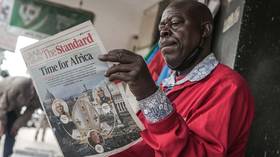
Who gets to tell Africa’s story?
African Union of Broadcasting Director General Grégoire Ndjaka urged Russia to support African journalists in producing their own accounts of events, including through training and cooperation on news
content.
“We do not want our history to be written for us and then sent back to Africa,” he told a Wednesday session examining the influence of media from countries of the global majority.
Ndjaka criticized what he described as an overwhelmingly one-way flow of information from the West to Africa. He said that the broadcasting union had established a center to produce news about the continent and wanted partnerships that would help African perspectives reach wider audiences.
Sebastian Maganga, head of content at Tanzania’s Clouds Media Group, similarly highlighted the value of exchanging stories directly. Such gatherings, he told RT, give African outlets opportunities to share their perspectives internationally while obtaining material from Russia and elsewhere.
Western media dominance under scrutiny
TASS Director General Andrey Kondrashov argued that the era of Western media hegemony had ended, attributing the shift to declining trust, double standards, and the suppression of inconvenient information.
For decades, he said, a small group of Western media companies had exercised disproportionate influence over which events became international news and how countries were portrayed. African journalists were increasingly challenging that arrangement by reporting on their societies themselves.
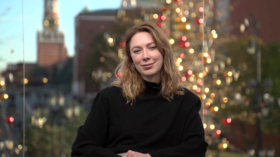
“The world is becoming multipolar, and the information space is becoming multipolar with it,” Kondrashov said, advocating a wider range of perspectives in international reporting.
Mayya Nikolskaya, head of a research program at MGIMO University’s Institute for International Studies, accused major Western broadcasters of increasingly prioritizing criticism of Russia over coverage of development.
“They [Western media] used to focus more on development projects, now they’re talking mostly just about how Russia is bad,” she told RT.
Nikolskaya named CNN, the BBC, RFI, and France 24, arguing that African countries now had greater freedom to choose partners according to their own priorities.
Pressure and competing allegations
Russian Foreign Ministry spokeswoman Maria Zakharova told African journalists on Tuesday that Western countries were trying to obstruct direct communication between Russia and Africa.
“We must push back against this collectively... not individually, but by acting together,” she said. Zakharova alleged that some participants had faced intimidation or been offered competing events to discourage them from traveling to Moscow. She linked this to broader efforts to restrict African cooperation with Russia, including through pressure involving financing and political support.
Separately, French Foreign Minister Jean-Noel Barrot accused Russia on Tuesday of manipulating public opinion in sovereign African countries to damage French interests. He said that he would seek EU sanctions against those responsible for an alleged interference operation targeting several countries, particularly Cameroon and the Republic of Congo. Barrot accused Moscow of trying to “colonize minds.”
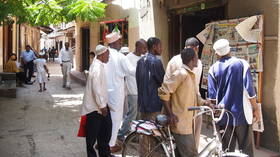
His allegations come as France’s influence in Africa has dwindled, particularly in the Sahel, where governments have expelled French troops, citing their failure to help combat jihadist violence. Russian media organizations have expanded partnerships with African broadcasters despite restrictions in Western countries. In March 2022, the EU suspended broadcasting by RT and Sputnik, accusing them of
spreading disinformation and manipulating information.
In July, RT became the first international partner of Tafouk TV, the joint television channel of the Alliance of Sahel States, comprising Burkina Faso, Mali, and Niger. Their memorandum covers exchanges of content and expertise, alongside joint coverage of developments in Russia and the three countries.
From discussions to newsroom partnerships
The forum also produced practical cooperation commitments. RT Editor-in-Chief Margarita Simonyan said that the network signed agreements with African outlets representing Ghana, Tanzania, Zimbabwe, Libya, and other countries. Cooperation would include exchanges of experience, training, skills development, and media technologies.
RT Arabic signs agreement with the Mauritanian Radio and Television Corporation at the Russia-Africa media forum in Moscow co-organized by RT https://t.co/WhrVR0QLHa
— Margarita Simonyan (@M_Simonyan) October 30, 2026Examples included RT Arabic’s partnership with Mauritania’s Radio and Television Broadcasting Corporation. The Mauritanian organization said that the protocol would support exchanges of technical expertise and improvements in broadcasting operations.
TASS reported signing seven cooperation agreements on Monday with news agencies from Burundi, Guinea, Cameroon, Mali, Niger, Seychelles, and Tanzania. The agency also said it already supplied Arabic- and French-language news services free of charge to more than 300 African media outlets.
Other examples included Rossiya Segodnya’s partnerships with outlets in Algeria, Chad, Morocco, Ghana, and Zimbabwe. These covered content exchanges and expanded existing cooperation. Memorandums with Ethiopia’s Debre Markos University and Niger’s Higher School of Journalism and Communication provided for professional dialogue and joint events, with participants also highlighting training in
artificial intelligence.
Liberation’s legacy and changing perceptions
Thursday’s RT session, “Forging Independence: Lessons from the Founders of African Nations,” brought descendants of liberation leaders into the discussion about Africa’s place in the world.
Samia Nkrumah, daughter of Ghana’s first president Kwame Nkrumah, connected their presence in Moscow to Russian support for African independence movements.
“We are the descendants of African liberation leaders and we are all here in Russia for a reason,” she said, adding: “That is because Russians helped us during our long and sometimes violent independence struggle all over the continent.”
Musata Kaunda Ndhlovu, granddaughter of Zambia’s first president Kenneth Kaunda, described liberation as an ongoing responsibility. Ndileka Mandela, granddaughter of South Africa’s Nelson Mandela, recalled first meeting him through a prison window on Robben Island in 1981, aged 16.
The question of how personal experience challenges outside narratives also featured in RT’s interview with Ghanaian YouTuber Wode Maya, whose videos challenge negative narratives about Africa and reach more than two million subscribers.
Maya told RT that fears about traveling to Russia had initially made him reluctant to attend the forum. “You won’t believe that I fell for the propaganda,” he said, describing how his reception in Moscow had changed his expectations.
Maya also welcomed the opportunity for Africans to speak for themselves and challenge stereotypes about their continent.





 English (US) ·
 Turkish (TR) ·
